
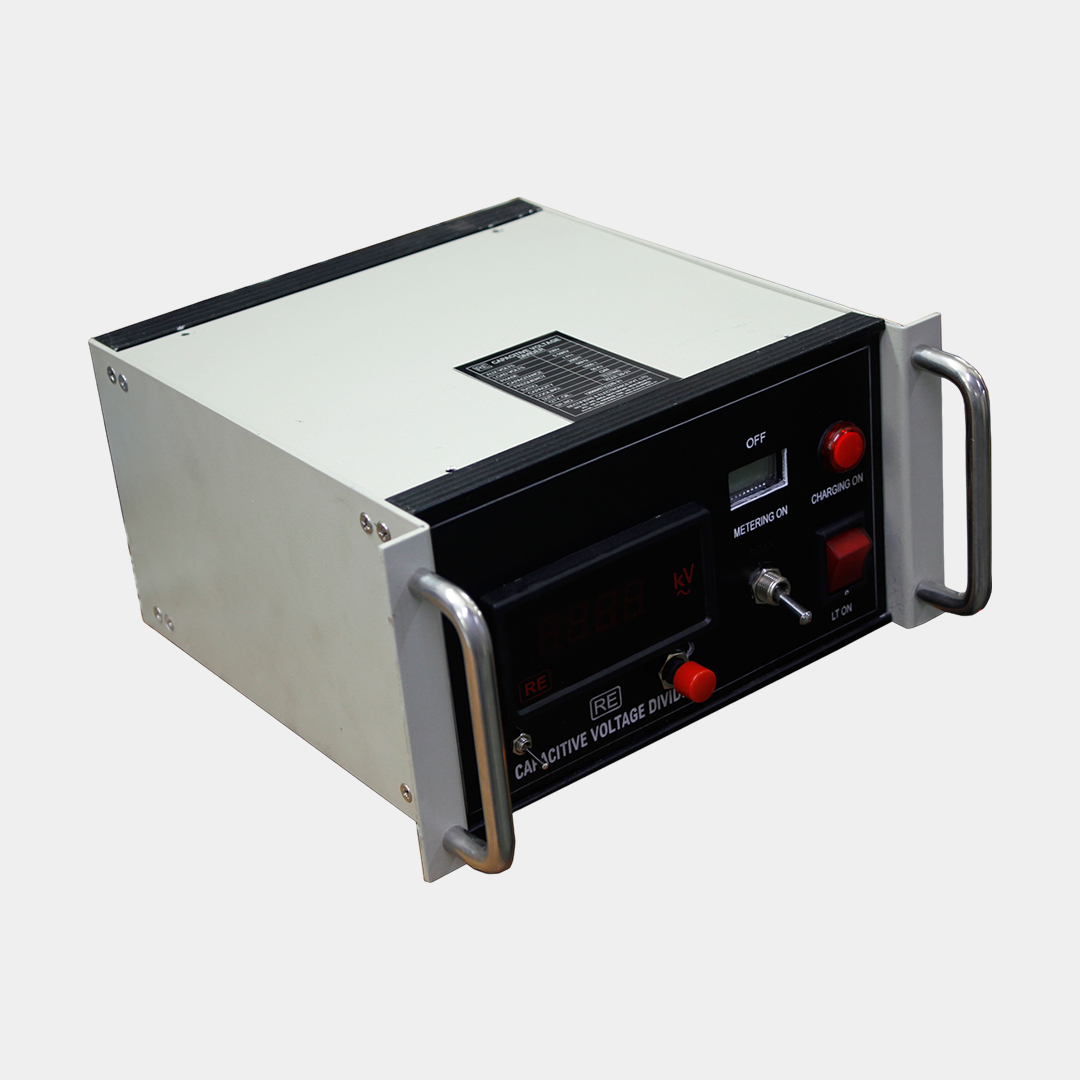
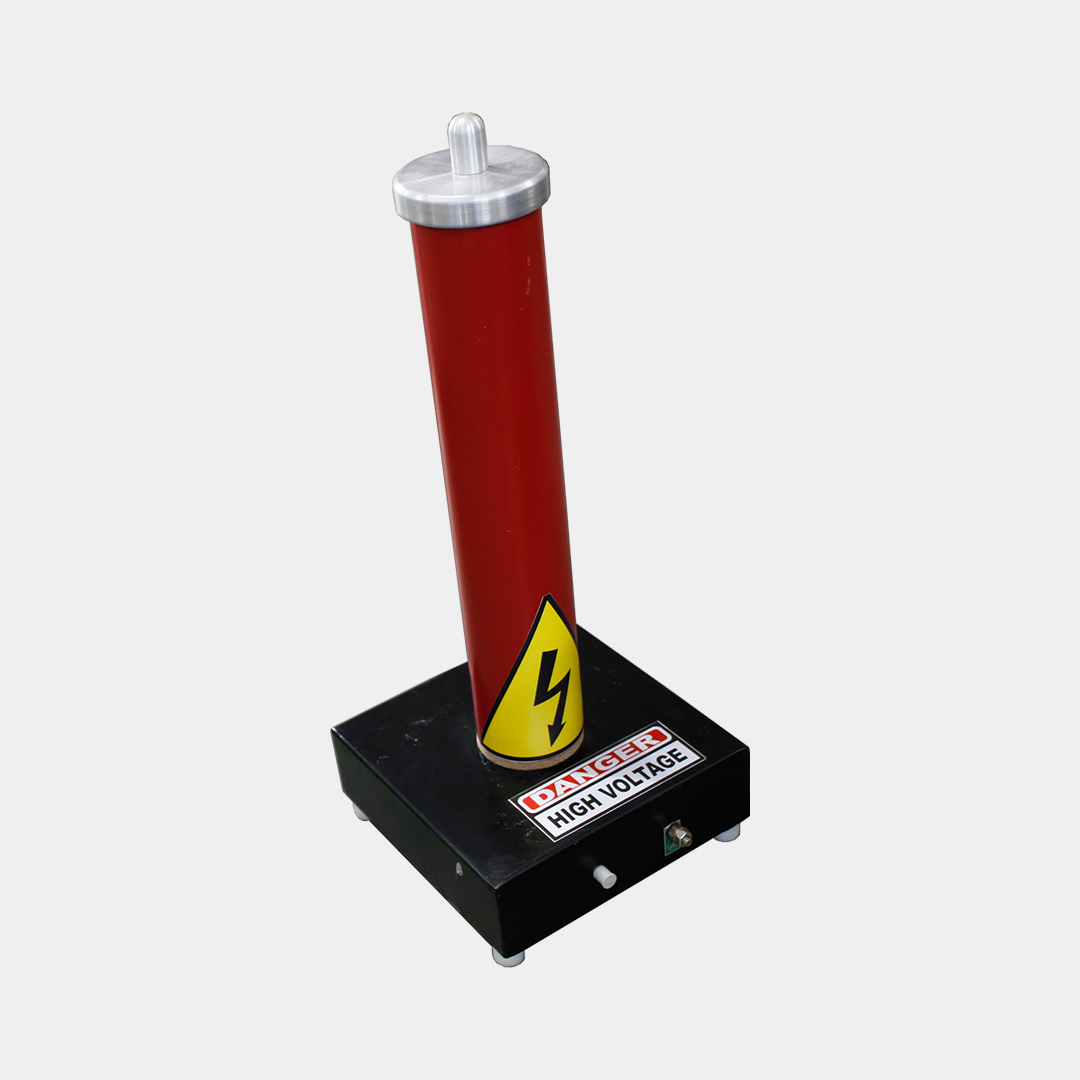
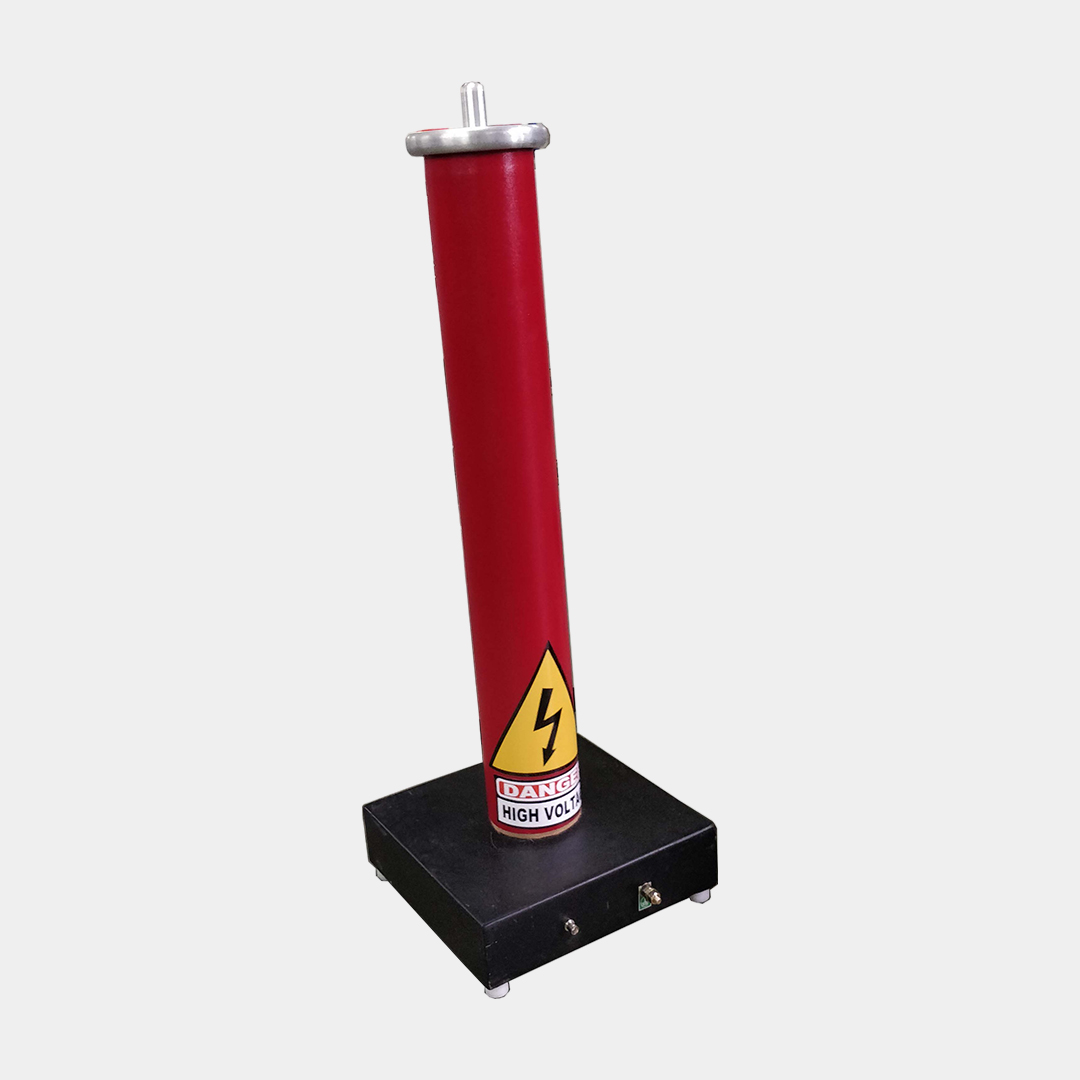
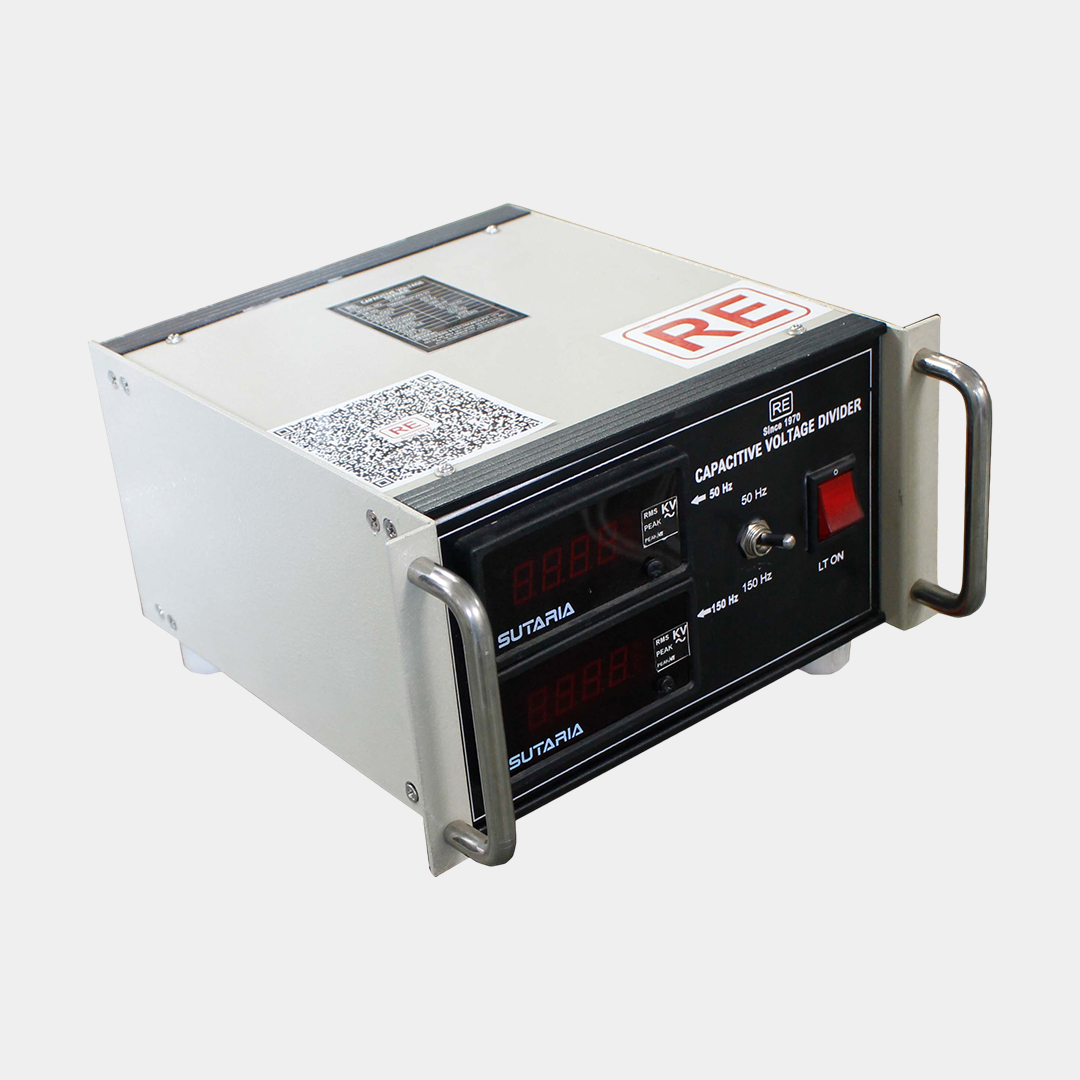
A Kilovolt Meter (kV meter) is a vital tool for accurately measuring the kilovolt rating of Instrument Transformers (CTs and PTs). It excels at precise calibration across a wide range, from 1% to 110% of the rated voltage.
What are the benefits?
These meters are known for their portability and accuracy, meeting NABL standards. A typical kV meter consists of three main parts: a high-voltage divider assembly, a precise readout device, and connecting cables. The battery-powered operation makes them ideal for field testing, while their precision components ensure reliable use in laboratories as well.
| Parameters | Description | |
| 1 | Maximum Capacity | Up to 800kV |
| 2 | Number of Sections | One for each 200kV or one for 100kV depending on capacity |
| 3 | Length of Section | 100kV – 0.75 meter 200kV – 1.25meter |
| 4 | The capacitance of the unit | Generally 200pF |
| 5 | Measured Parameter | Peak Voltage, RMS Voltage, DC Voltage, and peak/ √2 |
| 6 | Frequency Response (AC) | AC 40 to 60HZ |
| AC 40 to 200HZ | ||
| 7 | Frequency Response (DC) | Up to 1MHz |
| 8 | Least Count | 0.1kV |
| 9 | Enclosure | FRP |
Domestic Govt. Sales :
Mr. Gulshan Matta : 9312015657
Domestic /International Sales:
Mr. Chandan Chugh 9910962423
Mr. Vinod Bajaj 9811211479
For Service Queries :
Ms Manju : 9953909888
For Calibration:
Ms Kirti Sharma : 01143680100 (Ext. 242)
Copyright 2025 Rectifiers & Electronics Pvt. Ltd. All Rights Reserved.
